--:--
SAHIL SAPARIYAENGINEER · PRODUCT BUILDER

Sahil Sapariya — Software Engineer and Product Builder, based in Vadodara, Gujarat, India. Working at Jeavio; alumnus of Dharmsinh Desai University.
.

Sahil Sapariya is a full-stack software engineer at Jeavio, based in Vadodara, Gujarat, India. He builds production SaaS systems end to end — frontend architecture, backend workflows, deployment. He is an alumnus of Dharmsinh Desai University (DDU). Selected work includes Nexchool (a school management SaaS), Retail-OS (a retail platform), and the DUHACKS 2.0 award-winning College360. Sahil works with Next.js, TypeScript, Python, Django, FastAPI, PostgreSQL, and React.

Software Engineer @ Jeavio·Vadodara, IN·--:-- IST
BASED IN VADODARA · IN
INDEX / 02Current Focus
LIVE --:-- IST

Currentlybuilding.

01
active
School ERP platform
Frontend architecture and several backend modules.
02
active
Inventory management system
Practical workflows and reliable execution.
03
exploring
AI-assisted engineering workflows
Pipelines, automation, iteration loops.
04
shipping
Production SaaS systems
Release cadence and deployment discipline.
05
curious
Low-level + high-performance systems
Systems thinking and execution depth.
INDEX / 03Selected Work
4 CASE STUDIES

Selectedwork.

(01)

Nexchool

2025
Active · SaaS
STAGE 01 / 03·CONTEXT
CONTEXT

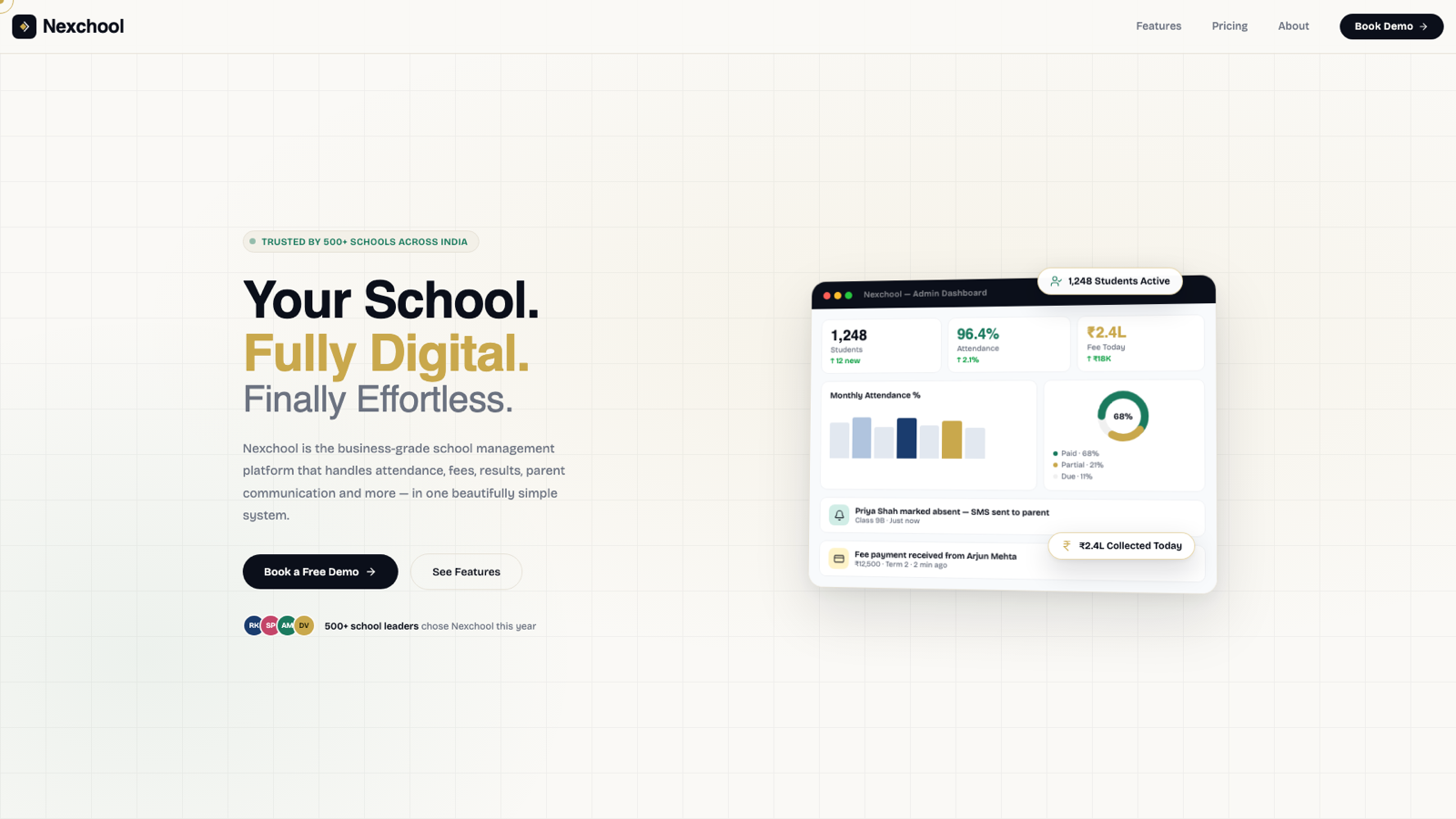
A school management SaaS platform built for real institutions — academics, attendance, timetable, dashboards, and operational workflows. Co-owned with a friend; shipping iteratively.

I own the frontend architecture and several backend modules, working closely on product decisions and implementation flow.

SCOPE
Co-ownerFrontend architectureSeveral backend modulesProduct decisions
HARDEST DECISION

"Designing the academic backbone in a future-proof way instead of taking shortcuts that would have made timetable, attendance, and subject management harder later."

STACK
Next.jsTypeScriptPostgreSQLRESTAuth
STAKES

Schools don't get to be down. Academic cycles are calendar-driven. A subtle data-model decision in week two echoes for years.

(02)

College360

2024
Shipped · Award
STAGE 01 / 03·CONTEXT
CONTEXT

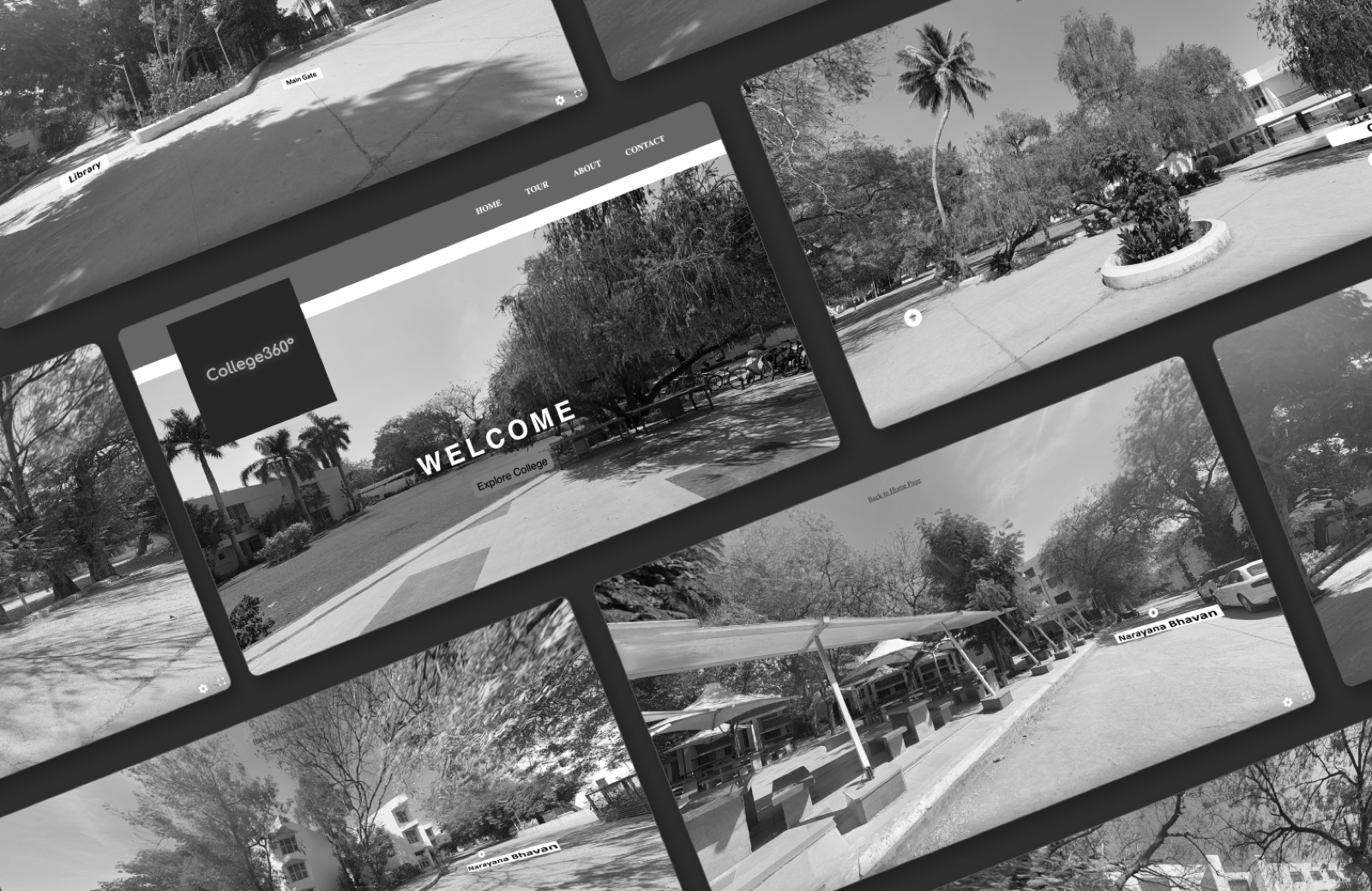
A 3D virtual campus experience built during DUHACKS 2.0 hackathon to help students explore Dharmsinh Desai University remotely.

I was the team lead — product direction, frontend implementation, and overall execution.

SCOPE
Team leadFrontend3D sceneProduct direction
HARDEST DECISION

"Aggressively limiting scope so the demo felt polished and complete instead of trying to simulate an entire university ecosystem."

STACK
Three.jsPanolens.jsHTMLCSSJavaScript
Best Open Innovation — DUHACKS 2.0
STAKES

Thirty-six hours. Four people. A judging panel. Scope wasn't a planning exercise — it was the only variable we could actually control.

(03)

Retail-OS

2025
Active · SaaS
STAGE 01 / 03·CONTEXT
CONTEXT

A retail SaaS platform that runs the whole shop — parties (customers/suppliers), products, purchases, inventory, POS sales, returns, with accounting and analytics on the roadmap. Inventory is one module inside it; retail is the actual domain.

I handle the product architecture, frontend system design, and backend workflow implementation.

SCOPE
Product architectureFrontendBackend workflowsUX
HARDEST DECISION

"Prioritizing operational simplicity and maintainability over adding unnecessary complexity too early — a small retailer's reality is messier than the abstractions you'd reach for first."

STACK
Next.jsPostgreSQLPrismaREST
PRIVATE · INTERNAL PRODUCT
STAKES

Retail data is operational data. A confusing UI doesn't slow people down — it produces wrong numbers. Reliability beats novelty here.

(04)

AI Workflow Experiments

Ongoing
Exploring · Solo
STAGE 01 / 03·CONTEXT
CONTEXT

A collection of internal experiments around AI-assisted engineering workflows, implementation pipelines, and developer automation systems.

Solo — exploring how AI can improve execution speed and iteration quality without replacing engineering judgment.

SCOPE
Workflow designCritique loopsPatch + testDiff review
HARDEST DECISION

"Designing workflows that remain reliable and practical instead of becoming over-automated gimmicks."

STACK
OpenAI APILangChainPythonNode
PRIVATE · INTERNAL PRODUCT
STAKES

Trust is the bottleneck, not throughput. A pipeline that's slightly wrong fifty percent of the time saves nothing — engineering judgment stays the bar.

INDEX / 04Systems & Engineering
THE PATH

HowI work.

One continuous flow — from a brief to production and back again. Each stage is a decision; each curve is a habit that's taken a while to learn.

iterate01 / Brief02 / Schema03 / Contracts04 / Implementation05 / Preview06 / Review07 / Ship
01
Brief
Understand the problem, the constraint, the user.
02
Schema
Data model first. Shape before code.
03
Contracts
Module boundaries — what each piece owes the others.
04
Implementation
The smallest version that proves it. Ship that first.
05
Preview
Every PR gets its own URL. Reviewers see the change.
06
Review
A conversation between author and reader. Not a gate.
07
Ship
Production. Then monitor what just changed.
INDEX / 05Field Notes
5 NOTES — SCROLL HORIZONTALLY

Notes fromproduction.

Real engineering moments, abstracted to protect client and internal details.

← SCROLL ↓ TO ADVANCE →

NOTE 01
ACCESSIBILITY

On building for users who don't see the page.

Worked on an education product where some users were visually impaired. Keyboard navigation, focus rings, screen-reader landmarks, semantic structure — features that should have been there from day one became retrofits. The lesson stayed: accessibility isn't a feature, it's a debugging discipline.

WCAG 2.1ARIAKeyboard navScreen readers
NOTE 02
INTEGRATION

On integrating against real APIs.

Building a Zoom integration inside an internal product. Users could connect their Zoom account, authorize access, browse the recordings of meetings that had happened in the product, pick the ones they wanted, and import those recordings back in. The documentation example fit on one screen — making it survive timezones, token refresh, large recording lists, and partial import failures took weeks. Real integrations are five percent protocol and ninety-five percent edge cases.

Zoom APIOAuthRecordingsImport flow
NOTE 03
CERTIFICATION

On engineering for compliance.

Helping a client product clear a certification audit meant writing not just the code but the trail it leaves — audit logs, role boundaries, data handling, retention policy. Engineering is the part everyone sees. The certification is the part nobody does.

Audit logsRBACData handlingDocumentation
NOTE 04
PRODUCTION

On debugging things you didn't build.

A deployment that should have been routine wasn't. Half the diagnosis was reading other engineers' notes from eighteen months ago. The other half was learning the system from the way it failed. Production teaches faster than docs — but only if you write the docs as you go.

PostmortemLoggingTracingOnboarding
NOTE 05
FRONTEND

On the boring half of frontend.

Most of the work on a real product isn't shipping the flashy components. It's making sure the existing ones don't break when the content is in Hindi instead of English, when the browser is Safari, when the network is 3G, or when the device hasn't been updated since 2019. The boring half is most of it.

I18nCross-browserPerformanceEdge cases
END OF NOTES

More live in commit messages.

PROGRESS
INDEX / 06Journey
2017 → TODAY

A workingtimeline.

2017
A small town. Curiosity. Internet mostly through mobile devices, and early interest in technology before I had words for it.
2021
JEE preparation in a metro hostel after years of native-language schooling. The transition exposed me to intense competition and reshaped how I think about discipline, pressure, and ambition.
2022
Entered DDU for Information Technology. Started programming seriously and got deeply pulled into software engineering and product building.
2023
First real-world projects and collaborative development. Early exposure to production thinking and implementation discipline.
2024
Frontend-heavy product development. Sharper sense of UI systems, implementation quality, and engineering workflows.
2024
DUHACKS 2.0 — won Best Open Innovation with College360 while leading the team.
2025
Working on complete product systems — frontend architecture, backend workflows, deployment flow, and product execution.
Today
Building School ERP, exploring AI-assisted engineering workflows, and getting more interested in systems thinking, execution quality, and low-level engineering concepts.
INDEX / 07Experimental Lab
5 EXPERIMENTS

Thingsin progress.

Half-built experiments and side explorations. Honest about status — not every idea ships, and that's the point.

01
exploring

CShell

C

A small Unix shell built in C. Process control, pipes, syscalls — low-level exploration to learn how the layer beneath the language actually works.

LAST TOUCHED · 2 MONTHS AGO
Repo ↗
02
shelved

8086 Assembly Notes

Assembly

Assembly experiments from undergrad. Low-level programming on the 8086 — register conventions, addressing modes, the metal underneath higher-level abstractions.

LAST TOUCHED · 3 YEARS AGO
Repo ↗
03
exploring

AI Engineering Pipeline

Python · TypeScript

Structured AI-assisted implementation workflows. Prompt → critique → patch → test loops for my own development cadence.

LAST TOUCHED · TODAY
PRIVATE
04
in use

Portfolio Monograph

Next.js · framer-motion

This site — a cinematic editorial engineering portfolio. Built in public.

LAST TOUCHED · TODAY
Repo ↗
05
shelved

Account-Verse

Go

My own take on Authorizer.dev — user management primitives, auth flows, role boundaries. Mostly a learning exercise; the original is the better tool, but rebuilding it taught me where the hard parts actually are.

LAST TOUCHED · 7 MONTHS AGO
Repo ↗
INDEX / 08Philosophy
5 LINES
01
02
03
04
05
INDEX / 09— Contact
AVAILABLE FOR PRODUCT WORK
Up late, friend.

Talk to me about hard
product or systems work.

Sahil Sapariya.
© 2026 Sahil Sapariya · All Rights Reserved
--:--IST · VADODARA